

BMKManu DG1000 vs. Mainstream Overseas Single-Cell Platforms
New Release | BMKManu DG1000 Single-Cell RNA Sequencing Arrives
2022-06-20
BSCMatrix v1.9 Environment Setup and User Guide
2022-07-15
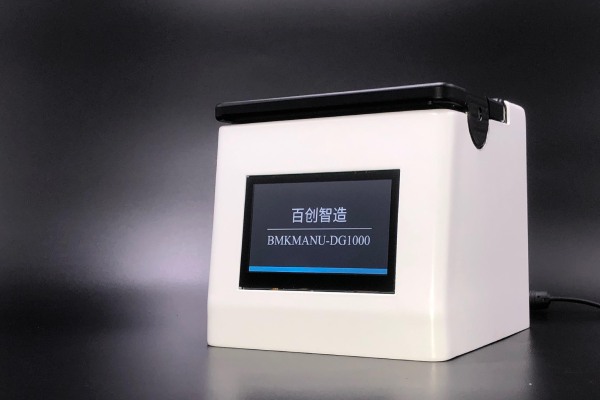
BMKManu DG1000 and supporting consumables
Single-cell sequencing has advanced rapidly since it was introduced, and the number of single-cell platforms has grown with it. On 25 May this year, BMK launched BMKManu DG1000, an in-house single-cell platform that captures individual cells through microfluidics and water-in-oil droplet formation. Alongside the instrument, BMKManu DG1000 ships with 2×4 independent chips and matching reagent kits.
Compared with mainstream overseas platforms, BMKManu DG1000 makes concrete breakthroughs and improvements. The details are compared below.
Size and weight
Mainstream overseas platforms measure roughly 260×200×160 mm and weigh about 7 kg. Taking one to an external experiment means bringing a rolling case, which is inconvenient in the field. BMKManu DG1000 is two-thirds the volume and half the weight of mainstream platforms, so the rolling case is gone — a single backpack is enough. It is, quite literally, a single-cell platform that fits in a backpack.

Run time
Mainstream single-cell platforms need 18 min to form GEMs. The long wait matters: once cells are removed from their tissue they are easily stressed by external stimuli, which biases the results. BMKManu DG1000 captures individual cells through microfluidics and water-in-oil droplet formation and completes GEM formation in just 110 s, sharply cutting the wait at this step and reducing cell stress.

Chip design
Mainstream single-cell platforms use an 8-channel integrated chip, which is inflexible when sample numbers vary and effectively lengthens the experimental cycle; with few samples it also wastes reagents. BMKManu DG1000 uses 2×4 independent chips, so loading scales to the actual number of samples — less waste, lower cost.

Channel compatibility
The channels on mainstream overseas platforms accept cells up to 40 μm in diameter, so compatibility with larger cells is poor and clogging is common. BMKManu DG1000 channels are 65 μm, accommodating a wider range of cell diameters and expanding the range of cell types that can be profiled.

In short, BMKManu DG1000 captures and separates individual cells through microfluidics, water-in-oil droplets and Cell Barcode labelling. Compared with mainstream overseas platforms, it offers the following:

BMKManu DG1000 offers a more portable and user-friendly size and weight, a shorter GEM generation time, greater chip flexibility and a larger channel diameter. Matching data-analysis software will also be released shortly.

Related posts


Warning: Trying to access array offset on value of type bool in /www/wwwroot/10.3.128.39/wp-content/themes/betheme/functions/theme-functions.php on line 1467
Warning: Trying to access array offset on value of type bool in /www/wwwroot/10.3.128.39/wp-content/themes/betheme/functions/theme-functions.php on line 1467