
Featured | BMKManu S1000 Spatial Transcriptomics Chip with Resolution Down to 5 μm

BMChiper V2.0 User Guide
2017-02-03
BMKManu S1000 — Embryonic Brain Hippocampus Sample Information
2022-05-31
Figure 1. BMKManu S1000 subcellular-resolution microwell spatial chip
On April 20, 2022, the subcellular spatial transcriptomics chip BMKManu S1000, developed by BMK (Biomarker) BMK Manufacturing, was successfully launched. The BMKManu S1000 spatial transcriptomics chip uses spatial barcodes on microwell beads to detect the spatial positions of mRNA molecules captured on tissue sections, thereby revealing gene expression. This technology raises the resolution of spatial omics to 5 μm, whereas mainstream overseas chips remain at 100 μm, marking the entry into an era of fully domestic subcellular-resolution spatial transcriptomics.
BMKManu S1000 vs. mainstream overseas technology
BMKManu S1000 vs. mainstream overseas technology
1. Resolution down to 5 µm, enabling subcellular localization.
[su_table]
| BMKManu S1000 | Mainstream overseas technology |
| The BMKManu S1000 chip improves precision by roughly 400-fold, achieving a resolution of 5 µm that accurately resolves heterogeneity in spatial gene expression and the specificity of tissue regions. | Mainstream overseas spatial transcriptomics chips (resolution: ~100 μm) |
[/su_table]

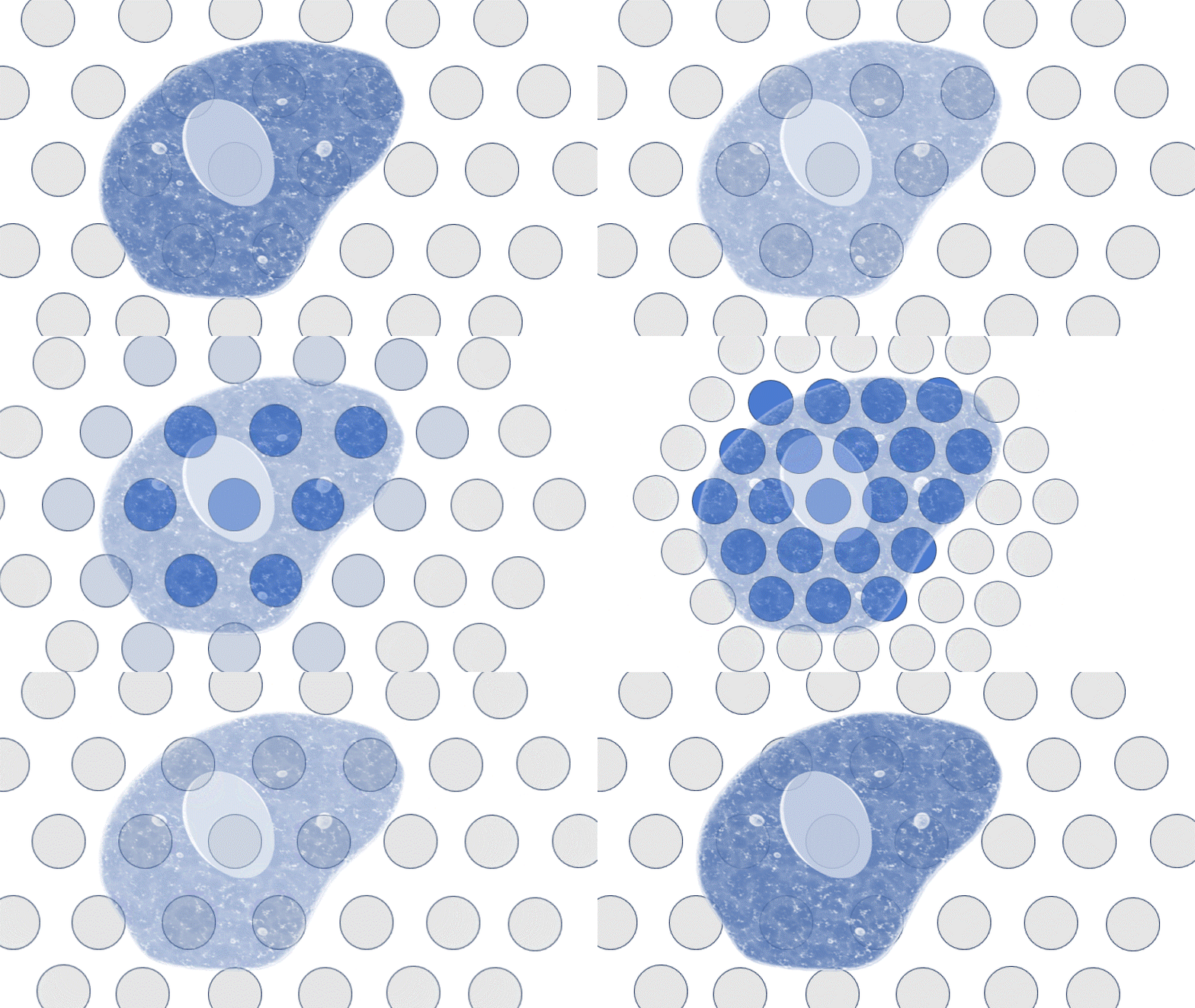
Figure 2. Measured results of the BMKManu S1000 at different subcellular resolutions (sample: brain hippocampus)
2. Flexible use of 1–8 capture areas to reduce batch effects.
[su_table]
| BMKManu S1000 | Mainstream overseas technology |
| The BMKManu S1000 introduces a redesigned chip architecture that supports flexible customization of 1–8 capture areas, shortening the experimental cycle and reducing batch effects. | Most mainstream spatial transcriptomics platforms are limited by fixed capture areas (four fixed capture regions), so four samples must be collected before library construction and sequencing can begin. |
[/su_table]

Figure 3. Gene expression chip images of the BMKManu S1000 (left) and mainstream technology (right)
3. HE staining is supported, preserving the most complete tissue morphology.
BMKManu S1000 spatial transcriptomics sequencing is compatible with HE staining, preserving higher-fidelity tissue morphology images.

Figure 4. Comparison of HE staining results on the BMKManu S1000 chip
4. More capture spots and a larger capture area
[su_table]
| BMKManu S1000 | Mainstream overseas technology |
| The BMKManu S1000 chip provides a capture area of 6.8 × 6.8 mm², enabling spatial expression analysis of relatively large tissues. Each capture area contains more than 2 million capture spots with a resolution of 5 µm (spot diameter 2.5 µm, center-to-center distance between adjacent spots 5 µm), and there are approximately 60 million types of spatial barcode beads. | Mainstream spatial transcriptomics platforms are constrained by spot diameter (55 µm), center-to-center distance between spots (100 µm) and capture area (6.5 × 6.5 mm²), so an entire region contains only ~5,000 capture spots, giving a resolution of 100 µm. |
[/su_table]

Figure 5. Chip design principles of the BMKManu S1000 (top) and mainstream technology platforms (bottom)
5. Multi-level resolution analysis for precise detection of multi-scale spatial structures
The BMKManu S1000 chip supports clustering at multiple resolutions from 100 μm down to 5 μm, making it suitable for spatial region analysis of tissue sections at different resolutions. Users can first capture the broad spatial expression of a tissue at low resolution, then switch to high resolution to precisely identify specific layers at boundary regions.

Figure 6. Schematic of the principle by which the BMKManu S1000 achieves subcellular localization
In summary, the main advance of the BMKManu S1000 is its microwell-based technology, which raises the resolution of spatial transcriptomics from the internationally common 100 μm to 5 μm, bringing measurement precision to the subcellular level. Compared with mainstream overseas chips, the BMKManu S1000 has the following characteristics:
Table 1. Performance comparison between the BMKManu S1000 and mainstream overseas chips

In addition, we provide a matching set of open-source, free toolkits that cover the entire workflow from raw sequencing data to gene expression matrix construction, including utilities for simple image recognition, expression matrix merging, resolution adjustment, visualization and clustering plots. The raw sequencing data are also fully compatible with current mainstream software and can be used directly for data analysis.

Figure 7. Data analysis software for the BMKManu S1000